Question 3D amends Article 2-4 of Aurora's charter to move the city's regular municipal election from the first Tuesday in November of odd-numbered years to even-numbered years, beginning in 2030, so the mayor and City Council appear on the same ballot as state and federal races. Special elections and polling hours stay as they are. City races remain nonpartisan, and the standard term stays four years.
City of Aurora
3D
Aurora city elections in even-numbered years
ElectionsElection date
Aurora would move regular city elections to even-numbered years and allow one-time shortened terms to make the change.
City of Aurora
On the November 3, 2026 ballot
Kim's Recommendation
YES
Vote Yes on City of Aurora Ballot Question 3D
I support the transition in Question 3D because it shortens terms instead of lengthening them. The mayor and council members elected in 2027 and 2029 serve three years instead of four, and each of those terms still counts toward the limit of three consecutive terms. The regular four-year terms covered by the transition shorten to three years, returning those seats to voters a year sooner. The amendment separately allows adjustments to vacancy-related terms to preserve staggering.
I also want Aurora's races on the even-year November ballot that already carries state and federal contests. Aurora voters cast about 151,400 votes on a city question in 2024 and no more than 78,900 on any citywide question in 2025. The higher coordination cost the city reports for even years is the price of putting nonpartisan city races before that larger electorate.
I recommend a yes vote on City of Aurora Ballot Question 3D.
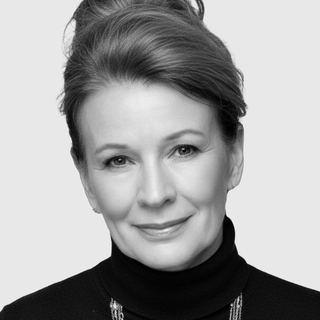
Kim Monson
Host, The Kim Monson Show · President, Colorado Union of Taxpayers · Colorado Voter's Guide 2026
Certified ballot question
Referred Measure to Move the City of Aurora's Regular Municipal Elections to Even-Numbered Years
Shall Article 2-4 of the City Charter of the City of Aurora, Colorado, be amended to direct that regular municipal elections shall be moved from odd-numbered years to even-numbered years with corresponding amendments to Article 3-5 of the Aurora City Charter to allow one-time shortened terms of office necessary to implement the transition to even-numbered year elections?
A yes vote means
Regular city elections would move to even-numbered years, with one-time shortened terms for the transition.
A no vote means
Regular city elections would remain in odd-numbered years.
A New Calendar for City Races01
Three-Year Terms for the Transition02
Aurora elects its council in two halves. One election chooses the mayor, two at-large members and the members for Wards IV, V and VI; the next chooses the members for Wards I, II and III and the other two at-large members. To bring both halves onto even years, the amendment to Article 3-5 gives anyone elected in 2027 or 2029 a three-year term. Council members now in office keep their current terms, Sentinel Colorado reported, but a member reelected in 2027 or 2029 serves the shorter term.
The amendment also strikes "four-year" from the term limit, which then reads three consecutive terms of office, so a three-year term counts toward the limit. For a seat filled under the charter's vacancy section, the charter now sets a two-year term at the next election where election timing requires it; the amendment instead lets that term be adjusted, including shortened to two years, to keep the seats staggered.
Cost and Turnout in Even Years03
City staff told the council that even-year elections cost Aurora more, because Arapahoe County typically runs about 25 more voter centers in midterm years than in odd years. The city paid $300,504.68 to coordinate its 2022 election and $121,285.73 in 2024, with one ballot question each year, and $71,903.04 in 2025 for five council seats and five questions.
Voters cast about 151,400 votes on a citywide measure in 2024, Sentinel Colorado reported. In 2025, the city's five citywide ballot questions drew between 76,471 and 78,900 votes, according to the city's official results.
How the Council Divided04
Council Member Alli Jackson sponsored Ordinance 2026-41, which the council passed on August 10 by six votes to four, with Mayor Mike Coffman abstaining. Jackson told Sentinel Colorado she hoped to improve participation in elections. Council Member Stephanie Hancock, who voted no, said local races "tend to get lost in the sauce" on long ballots; she and Coffman also raised concerns about national politics reaching nonpartisan races. Council Member Angela Lawson said she was not necessarily opposed to even-year elections but objected to placing the question on the same ballot as the city's sales tax questions.
Sources05
Official documents
Douglas County composite sample ballot, November 3, 2026 election
Further reading
Official documents
- Accessible version, 2026 General Election Composite Sample Ballot (Douglas County)Douglas County Clerk and Recorder
- 2026 Arapahoe County General Election Sample BallotArapahoe County Clerk and Recorder
Local government records
- 2026 ElectionCity of Aurora, City ClerkCity of Aurora web page stating the City Council approved placing the measure on the Nov. 3, 2026, General Election ballot.
- Aurora City Council study session packet, July 27, 2026 (item initiator: charter amendment on election timing, p. 95)City of AuroraCity of Aurora meeting packet identifying Council Member Alli Jackson as the item initiator for the charter measure.