
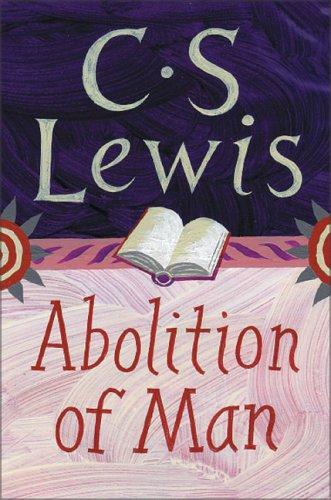
Abolition of Man
Bookshop.org →
Purchase links support the Kim Monson Show through affiliate partnerships. All proceeds go directly back into producing the show.
About This Book
The Abolition of Man, originally delivered as a series of three lectures at King’s College, Newcastle in 1943, is one of C.S. Lewis’s most important and prophetic works of philosophy. In it, Lewis sets out to persuade his audience of the importance and relevance of universal values such as courage, honor, and justice in contemporary society, arguing that these values — what he calls the Tao — are recognized across all cultures and throughout history.
Lewis begins by critiquing a contemporary English textbook that he believes undermines students’ ability to make moral judgments by teaching them that all values are merely subjective. He then builds a rigorous philosophical argument against moral relativism, demonstrating that attempts to debunk traditional values inevitably rely on the very values they claim to reject. The logical endpoint of such debunking, Lewis warns, is the ‘abolition of man’ — the reduction of human beings to mere objects of manipulation.
Chosen by National Review as number seven on their list of the 100 Best Nonfiction Books of the Twentieth Century, The Abolition of Man remains a powerful defense of natural law and objective morality. Lewis’s arguments about the dangers of scientism, the importance of moral education, and the relationship between values and human dignity continue to influence philosophical and theological discourse.


Get Your Copy Today
Available in Kindle, Paperback, Hardcover, Audiobook, Bookshop.org, Barnes & Noble formats
Purchase links support the Kim Monson Show through affiliate partnerships. All proceeds go directly back into producing the show.
