Listen to this article
0:00
/
0:00

The Founders wrote sound money into the Constitution. We have spent fifty years unwinding it.
A dollar tied to gold and silver was written into the Constitution after the Continental dollar collapsed. Historian Lawrence W. Reed argues that today's unbacked currency and a national debt nearing $40 trillion are a moral failure being billed forward.
The Kim Monson Community
Members get a front-row seat.
Live town halls with Kim’s guests are open to every member; classes are included with Monticello & Mount Vernon membership.
The Federalist Papers · Class 10
Federal Government and Taxes, Part 2
Part two on federal taxation: how state and federal taxing powers coexist, and the objections the Federalist answers.
with Allen Thomas · Instructor
Thursday, July 2 · 7:45 PM · Online
Monticello & Mount Vernon members
DENVER — The national debt stood at $39.31 trillion as of late June, on track to cross $40 trillion, and to the historian Lawrence W. Reed that number is a moral verdict more than a fiscal one. “I think someday there will be a generation of Americans who will look back on us and say, how could you run up a national debt of $40 trillion, print lots of money, cause all kinds of havoc in the economy and prices to soar, and then send us the bill for it all?” Reed said.
Reed is President Emeritus of the Foundation for Economic Education, and he has just published a book on the ideas that shaped the American founding. He appeared on The Kim Monson Show during a pre-recorded Independence Week broadcast, and the conversation arrived at the question that runs underneath the debt totals: what is a dollar supposed to be? In Reed’s telling, the Founders already answered it. They lived through a currency collapse, learned the lesson the hard way, and wrote the remedy into the Constitution. The country has since walked away from that answer, and Reed argues the bill for walking away is the one now being handed to the young.
A dollar that was a receipt for the real thing
Sound money is currency anchored to something real. For most of the country’s history that anchor was gold and silver, so a dollar amounted to a claim on a fixed weight of metal rather than a promise the government could redefine at will. Reed puts the principle in plain terms. “Paper money is fine if it’s a receipt for the real thing,” he said. The trouble starts, he explained, “when governments are in charge of it and they break any connection between it and a precious metal, which gives them the power to print for whatever reason.” That, he said, is “an enormous power to entrust to anybody.”
The Founders shared the worry, and they constrained it in writing. The Constitution grants Congress the power “To coin Money, regulate the Value thereof,” and in the same article it forbids the states from making “any Thing but gold and silver Coin a Tender in Payment of Debts” or emitting “Bills of Credit.” The word coin is doing deliberate work there. The men who drafted those clauses had just watched paper money detached from metal destroy itself, and they meant the dollar to be measured in something real.
Not worth a continental
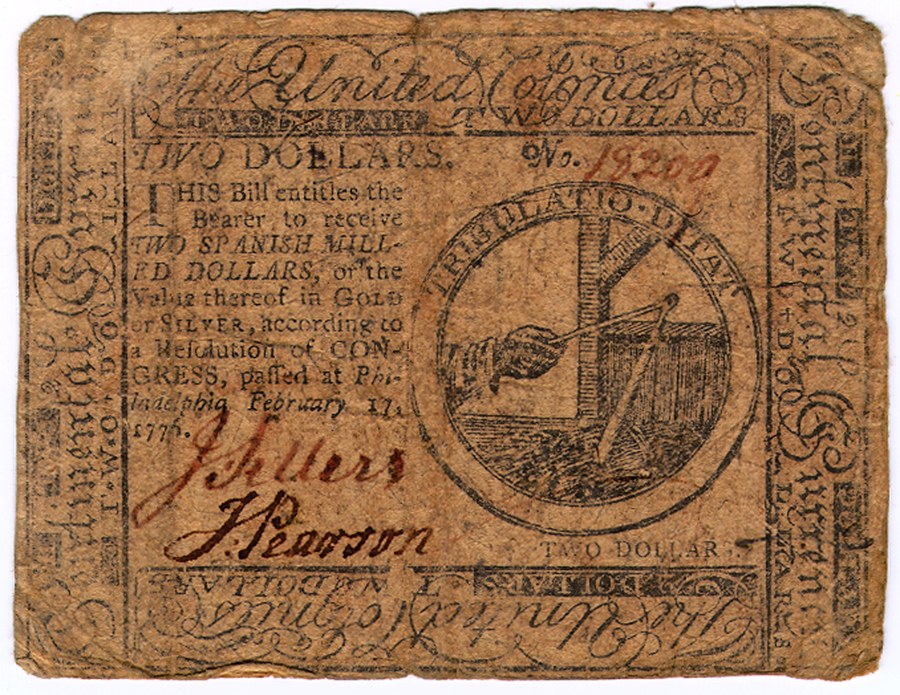
The lesson came from the Revolution’s own treasury. “Congress experimented with unbacked paper money early in the war,” Reed said. “They put Ben Franklin in charge of the printing press, and they said, now, don’t print too much. But the pressure to print was so immense that they printed the continental dollar until it became nearly worthless.” Congress issued roughly $200 million in Continental currency; by 1780 the bills traded at about one-fortieth of their face value, and by May 1781 they had stopped circulating as money at all. The collapse gave the language its proverb for worthlessness, “not worth a continental.”
From sound money to the bill
Two and a half centuries of the dollar
1775 to 2026
-
1775
The Continental Congress issues unbacked “Continental” paper to fund the Revolution, with Benjamin Franklin put in charge of the press.
Early American currency
-
1781
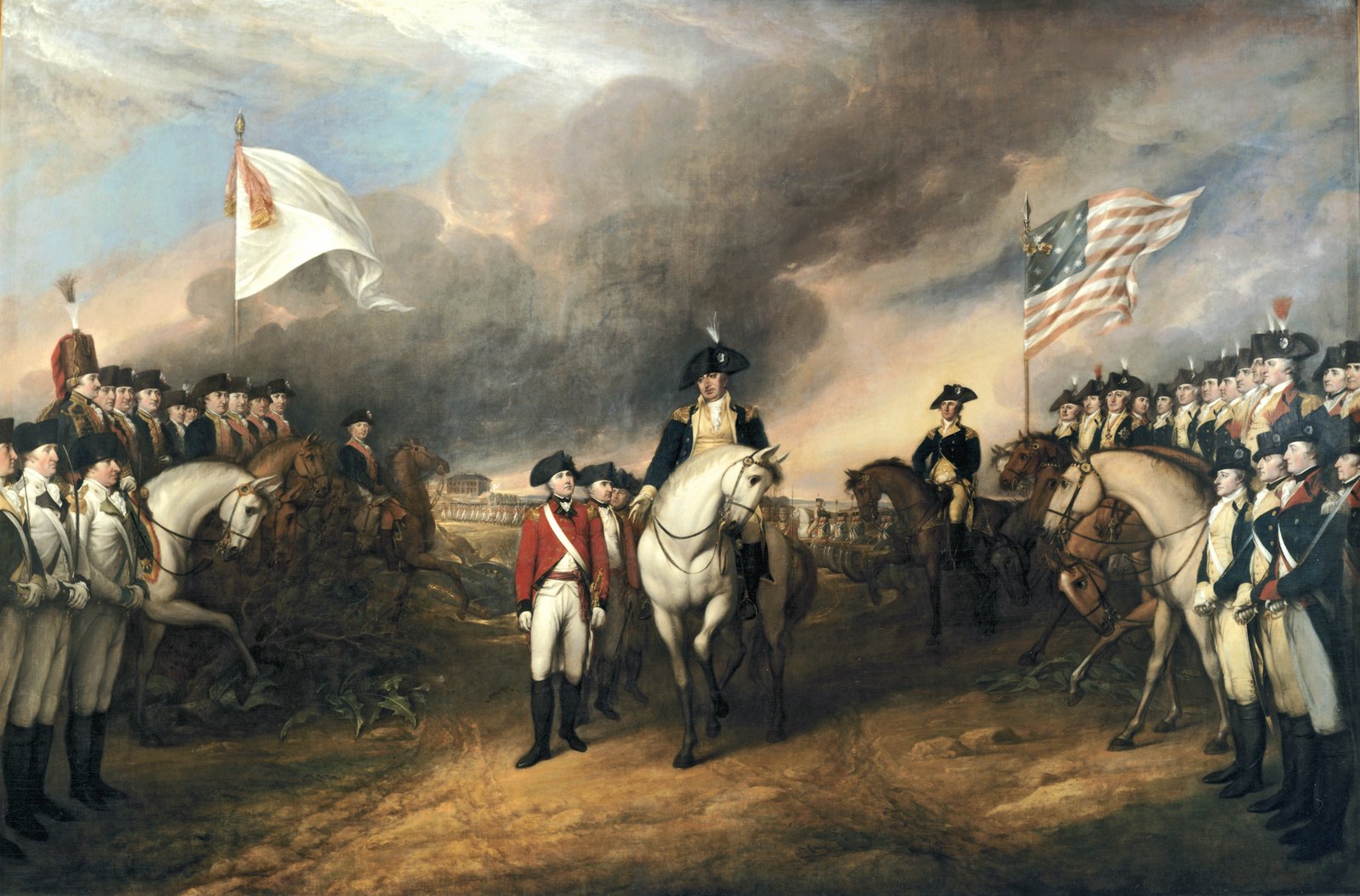
At Yorktown, Washington’s troops are paid in gold and silver raised in Havana rather than worthless Continentals, and the victory ends the war.
Siege of Yorktown
-
1787 to 1791
The Constitution empowers Congress “to coin Money” and bars the states from making anything but gold and silver coin a legal tender.
U.S. Constitution, Article I
-
1792
The Coinage Act defines the dollar in grains of silver and gold and founds the U.S. Mint, with a death penalty for debasing the coinage.
Coinage Act of 1792
-
1913
The Federal Reserve Act creates the Federal Reserve System and a national central bank.
Federal Reserve History
-
1933
Executive Order 6102 recalls privately held gold coin and bullion from circulation.
National Archives
-
1971
President Nixon closes the gold window on August 15, ending the dollar’s convertibility to gold and the Bretton Woods system.
Federal Reserve History
-
2026
The national debt reaches $39.31 trillion, on track toward $40 trillion.
U.S. Treasury, Debt to the Penny
What turned the war, in Reed’s account, was a return to honest money. “We started winning more battles when we got honest with our money and paid in gold and silver,” he said. He points to Yorktown in September 1781, where Washington’s troops, long unpaid, were close to walking away rather than laying siege. What held them in the field was hard coin. The French admiral de Grasse, Reed recounted, “did a door-to-door contribution campaign in Havana, Cuba, no less, at raising gold and silver from private citizens who supported the American cause,” delivering it “just in time for Washington to pay the troops in gold and silver.” The men had demanded a month’s pay in coin rather than worthless Continentals, and the specie raised in Havana helped bankroll the victory that ended the war.
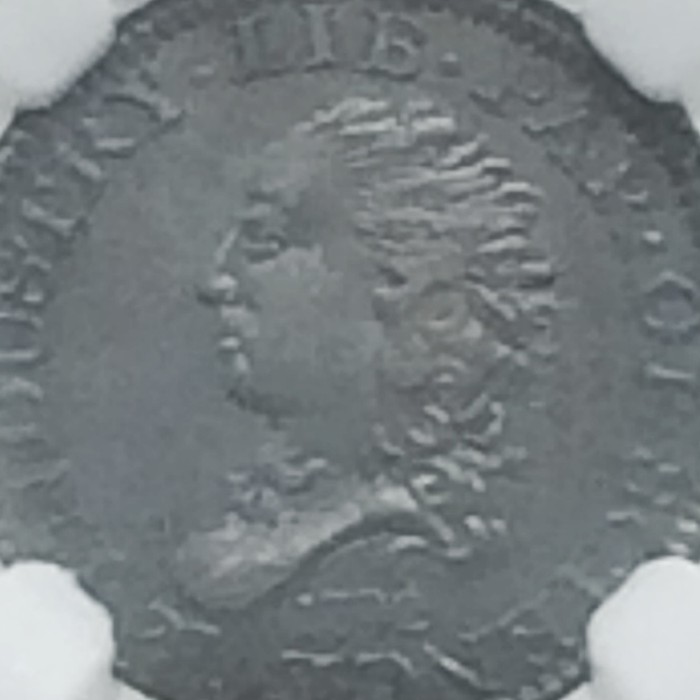
That experience drove the gold-and-silver clause into the Constitution, and the principle was made statutory soon after. Robert Morris, the Revolution’s financier and the man Congress put in sole charge of funding the army in 1781, called for a national mint and a uniform currency. The Coinage Act of 1792 answered the call. It created the United States dollar as the standard unit of money, established the United States Mint, and defined the dollar precisely in grains of silver and gold. It also set a death penalty for anyone who debased the coinage, a measure of how seriously the founding generation took the integrity of the money.
The bill sent to the next generation
The dollar no longer carries that definition. The last formal link between the dollar and metal was severed on August 15, 1971, when President Nixon ended the dollar’s convertibility to gold, closing the gold window and bringing down the Bretton Woods system. Since then the dollar has been backed by government decree alone, and the constraint the Founders built has been gone for more than half a century.
The ledger today
$39.31T
Total U.S. public debt outstanding
As of June 25, 2026 · U.S. Treasury, Debt to the Penny
1971
The year the dollar’s last tie to gold was cut
Nixon closes the gold window, Aug. 15
$40T
The debt Reed warns is being billed to the next generation
Lawrence Reed, on The Kim Monson Show
This is where Reed’s argument turns from monetary mechanics to moral accounting. “The last people you want to be in charge of an unbacked paper currency are spend-happy politicians who love to buy your vote with money they can print and send the bills to the next generation,” he said. Kim Monson named the stakes directly. “There’s something immoral about that,” Kim said. Reed did not hedge: “Yeah, absolutely.”
The complaint is generational by design. A specie-backed dollar forces a government to pay for what it buys in real value at the time it buys it. An unbacked dollar lets a government defer the cost, printing now and presenting the invoice to people who cannot yet vote. The debt that stood at $39.31 trillion in late June is, in Reed’s framing, that deferral made concrete.
Two designs for a dollar
Specie-backed dollar vs. unbacked fiat dollar
| Specie-backed dollar (founding design) |
Unbacked fiat dollar (today) |
|
|---|---|---|
| What backs it | Specie-backedA fixed weight of gold or silver, “a receipt for the real thing.” | Unbacked fiatGovernment decree alone, with the tie to metal broken. |
| How the dollar is defined | Specie-backedSet in grains of silver and gold by the Coinage Act of 1792. | Unbacked fiatNo statutory metal definition since convertibility ended in 1971. |
| Who controls issuance | Specie-backedLimited by the specie actually on hand. | Unbacked fiatA central bank that can “print for whatever reason.” |
| Inflation discipline | Specie-backedA hard ceiling on issuance restrains inflation. | Unbacked fiatOverissuance erodes value; Continentals fell to one-fortieth of face. |
| Who bears the cost | Specie-backedPaid in real value at the time. | Unbacked fiatDeferred, with the bill “sent to the next generation.” |
Sources: U.S. Constitution, Article I; Coinage Act of 1792; Federal Reserve History; U.S. Treasury, Debt to the Penny; Lawrence Reed on The Kim Monson Show. Quoted phrases are Reed’s.
A principle worth recovering
Reed is not fatalistic about it. When Monson asked whether the country can turn the trend around, he called himself “an eternal optimist.” The same force that led the country astray, he argues, is the one that can right it. “We are creatures of ideas, and we go in wrong directions when we are influenced by bad ideas,” he said. “But if we wake ourselves up, educate ourselves, understand what good ideas are of things like sound money and moral character, we can change the course of history.” Monson framed the 250th anniversary as “the third founding of our country,” a moment to recover principles the first Founders fought to establish.
Sound money is one of those principles, and Reed makes the case that it was a deliberate choice of the founding, paid for in gold and silver at Yorktown and written into the nation’s first law on the dollar. His new book, Born of Ideas: How Principles, Faith, and Courage Forged America, traces that founding from the Mayflower Compact forward, with chapters on how Washington won the war and on the money that funded it. The argument for the 250th is that the principle is still there to be reclaimed, if the country decides the next generation is owed its return.
Support independent journalism
The reporting in this article draws on the work of 1 independent newsrooms. Local and state journalism is shrinking across the country. Subscribing, donating, or becoming a member is the most direct way to keep these outlets covering the stories that matter to Colorado.
Kim Monson
Independent voice for liberty, free markets, Colorado, and America
Sources cited in this article
More in "Federal Reserve & Monetary Policy" Developing
Continuing coverage of this developing story
Federal Reserve & Monetary Policy
0 items: 0 articles, 0 episodes
Member Discussion
What Members Are Saying
No comments yet. Be the first to share your thoughts.