Skip to content
Douglas County voter rolls show 96 percent churn as DOJ sues Colorado over registration records
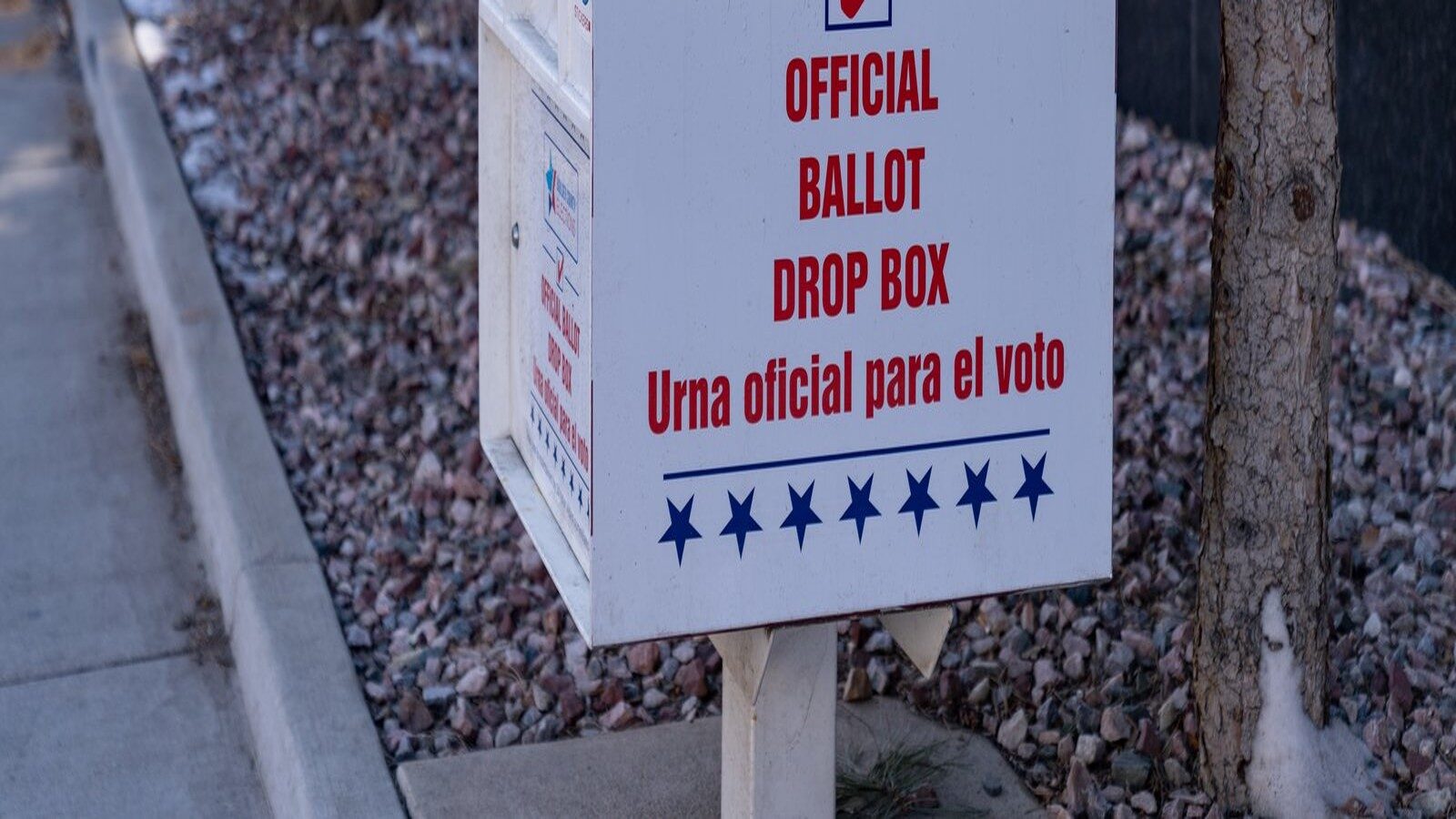
Photo: Tony Webster / CC BY 2.0 via Wikimedia Commons

Douglas County voter rolls show 96 percent churn as DOJ sues Colorado over registration records

An election integrity analyst says Douglas County has more active voter registrations than voting-age residents, while the federal government presses a lawsuit against Secretary of State Jena Griswold for refusing to hand over unredacted voter data.

Kim Monson Newsroom March 2, 2026
Listen to this article
0:00 / 0:00
Laramie Energy Proud Colorado Energy Producer Learn More →

The Kim Monson Community

Members get a front-row seat.

Live town halls with Kim’s guests are open to every member; classes are included with Monticello & Mount Vernon membership.

The Federalist Papers · Class 10

Federal Government and Taxes, Part 2

Part two on federal taxation: how state and federal taxing powers coexist, and the objections the Federalist answers.

with Allen Thomas · Instructor

Thursday, July 2 · 7:45 PM · Online

Monticello & Mount Vernon members

DENVER — Douglas County’s voter rolls contain more active registrations than the county’s voting-age population and have experienced near-total turnover in just four years, according to Dr. Douglas Frank, a scientist and election integrity analyst who presented the findings on The Kim Monson Show.

The data arrives as the U.S. Department of Justice pursues a federal lawsuit against Colorado for refusing to produce unredacted voter registration records, part of a broader national effort that had reached 18 states as of December 2025.

The data

Frank, who analyzes voter registration data across the country, said Douglas County has approximately 287,000 active registered voters against a voting-age population of roughly 280,000. Including inactive registrations, the total reaches approximately 316,000, he said.

“Your voter rolls are like 35 over,” Frank said on The Kim Monson Show. “I would say one in three of the people in your voter rolls don’t belong there.”

Frank described the rate of change on Douglas County’s rolls as 96 percent “churn” over the past four years, meaning the number of names added and removed from the rolls nearly equals the total number of registrations.

“In Douglas County, your churn is 96 percent,” Frank said. “That means the names in the rolls have almost as many people have been added and removed to your rolls as you have in your rolls.”

Frank’s figures are based on his own analysis of publicly available voter registration data. The Colorado Secretary of State’s office publishes county-level registration statistics monthly.

Federal lawsuit over voter records

The DOJ’s Civil Rights Division filed a federal lawsuit against Colorado on Dec. 11, 2025, in U.S. District Court in Denver. The suit alleges that Secretary of State Jena Griswold violated the Civil Rights Act of 1960 by refusing to produce statewide voter registration records, according to The Denver Post.

The DOJ is seeking full names, dates of birth, residential addresses, and either state driver’s license numbers or the last four digits of Social Security numbers for all registered voters.

Membership
Keep Independent Voices on the Air
Kim buys her own airtime to keep this conversation honest. Your membership funds independent journalism that holds Colorado leaders accountable.

“States have the statutory duty to preserve and protect their constituents from vote dilution,” Assistant Attorney General Harmeet K. Dhillon said in a DOJ press release. “At this Department of Justice, we will not permit states to jeopardize the integrity and effectiveness of elections by refusing to abide by our federal elections laws.”

Griswold declined the DOJ’s Dec. 1, 2025, request to enter a data-sharing agreement and has vowed to fight the lawsuit. Her office said it had already provided publicly available voter data in response to an earlier DOJ request in May 2025, according to a press release from Griswold’s office.

“We will not hand over Coloradans’ sensitive voting information to Donald Trump,” Griswold said in a statement. “He does not have a legal right to the information.”

Colorado was at least the 15th state sued. The DOJ has asked at least 26 states for voter registration rolls in recent months, according to the Associated Press.

ERIC and all-mail ballots

Colorado was one of seven founding members of the Electronic Registration Information Center, known as ERIC, when the multistate data-sharing organization launched in 2012 with assistance from the Pew Charitable Trusts. ERIC’s stated mission is to help states improve voter roll accuracy and increase registration access, according to its website.

Member states submit voter registration and motor vehicle department data to ERIC at least every 60 days. ERIC produces reports identifying cross-state movers, duplicates, deceased voters, and individuals who appear eligible but are not registered. ERIC states on its website that it does not connect to any state’s voter registration system and cannot directly add voters to the rolls.

Frank said the ERIC system contributes to voter roll growth by generating lists of eligible but unregistered individuals that states are required to contact. A 2023 Heritage Foundation report found that ERIC’s membership agreement requires states to send voter registration solicitations to 95 percent of eligible but unregistered individuals identified in its reports. At least seven states withdrew from ERIC beginning in 2022, citing concerns about forced registration outreach and data-sharing practices, according to the Heritage report.

Colorado’s shift to all mail-in ballots under the Voter Access and Modernized Elections Act, signed into law in May 2013 and effective for 2014 elections, coincided with a period of substantial registration growth. Colorado’s total registered voters grew from 2.4 million in 2010 to 3.9 million by 2023, a 60.4 percent increase, according to political scientists Tom Cronin and Bob Loevy writing in Colorado Politics.

County-level organizing

Jim Elliott, a state leader with Colorado Election Integrity, said grassroots groups are organizing at the county level to press for voter roll accuracy before the 2026 midterm elections.

Elliott said the strategy focuses on compelling county clerks and the secretary of state to comply with the National Voter Registration Act’s list maintenance requirements. The NVRA requires states to conduct programs that make a reasonable effort to remove the names of ineligible voters from the rolls.

The federal lawsuit and county-level data analysis have given local organizers a framework for demanding accountability, Elliott said on The Kim Monson Show. With the DOJ pressing for access to Colorado’s full voter records and citizen groups scrutinizing county-level registration figures, the question of voter roll accuracy is now being contested on multiple fronts ahead of 2026.

Support independent journalism

The reporting in this article draws on the work of 4 independent newsrooms. Local and state journalism is shrinking across the country. Subscribing, donating, or becoming a member is the most direct way to keep these outlets covering the stories that matter to Colorado.

Kim Monson Independent voice for liberty, free markets, Colorado, and America