[00:05] Announcer: It's the Kim Monson Show, analyzing the most important stories.
[00:11] Kim Monson: An early childhood taxing district?
[00:15] Announcer: The latest in politics and world affairs.
[00:16] Kim Monson: I don't think that we should be passing legislation that is so complicated that people kind of throw up their hands and say, oh, I can't understand it.
[00:24] Announcer: Today's current opinions and ideas.
[00:25] Kim Monson: It is not fair that just because you're a big business that you get a break on this and the little guy doesn't.
[00:31] Announcer: Is it freedom or is it force?
[00:33] Announcer: Let's have a conversation.
[00:38] Kim Monson: And welcome to the Kim Monson Show.
[00:45] Kim Monson: Thank you to each and every one of you who are joining us.
[00:52] Kim Monson: Take care of your heart, your soul, your mind, and your body.
[00:56] Kim Monson: Sign up for our weekly newsletter there.
[00:58] Kim Monson: You can email me at kim at kimmonson.
[01:02] Kim Monson: And we've got a great show planned for you today.
[01:04] Kim Monson: We're going to have in the second segment focusing on Tony Hartzik.
[01:10] Kim Monson: Tony, you are running for House District 44.
[01:17] Anthony Hartsook: A little cold and crisp out today, but it lets you know you're alive and ready to go.
[01:22] Anthony Hartsook: Yes, I'm running for HD44, for, which is down in Parker, Colorado, Douglas County, looking to bring some changes, get some freedom going here and kind of get the state back on track to prosperity and reducing some rules and things like that.
[01:36] Kim Monson: We're going to talk a little bit more about that in the second segment.
[01:38] Kim Monson: And then we have Josh Phillip with the Epoch Times schedule for our third and fourth segment.
[01:44] Kim Monson: I wanted to talk with him about Trudeau and the truckers.
[01:46] Kim Monson: Don't you find that amazing what's happening there?
[01:50] Anthony Hartsook: I mean you talk about just looking at the news where truckers have self-motivated in essence, and this has just turned into this massive movement in both united states, up in canada, and it's all about freedom, their their frustration and their form of a protest to get changes going instead of violence that we've seen so much here over the last couple years.
[02:08] Kim Monson: Right, and trudeau's gone into hiding, not unlike our president.
[02:13] Kim Monson: So true that today is a very special day.
[02:23] Producer Steve: I thought: Well, we weren't going to discuss this because I stopped having birthdays five or six years ago.
[02:29] Kim Monson: Well, I really slid in right to the hour to get in here.
[02:36] Kim Monson: But I made you a sour cream coffee cake, and it is warm.
[02:40] Producer Steve: I might have to start having birthdays again.
[02:45] Kim Monson: I get to work with a really great group of people, and that is producer Steve, Zach, Patty, Keith, Charlie, Jen, and all the people here at Crawford Broadcasting.
[02:53] Producer Steve: Hey, can I do a little follow-up regarding the Canadian truckers?
[02:56] Producer Steve: Yesterday, we talked about the fact that GoFundMe had basically put a hold on everything, and we gave them the benefit of the doubt and said, oh, well, maybe they're just overwhelmed.
[03:07] Producer Steve: They want to make sure they got this right, and we were wrong.
[03:10] Producer Steve: It is somewhat nefarious, and now they're getting a lot of bad publicity, so let's see where it goes.
[03:17] Kim Monson: I don't know what's happening with that.
[03:21] Producer Steve: Well, again, we gave them the benefit of the doubt, and we probably shouldn't have.
[03:25] Kim Monson: Okay, so stay tuned on that.$ 10 million has been raised, and I guess we're going to see whether or not GoFundMe will disperse that money.
[03:34] Kim Monson: So with that, let's go to our quote for today.
[03:37] Kim Monson: And I thought about this, Tony, because you were going to be in studio.
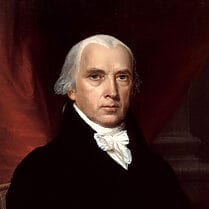
[03:43] Kim Monson: He was an American statesman, diplomat, philosopher.
[03:48] Kim Monson: He served as the fourth president of the United States from 1809 to 1817.
[03:53] Kim Monson: He's held as the father of the Constitution for his pivotal role in drafting and promoting the Constitution of the United States and the Bill of Rights.
[04:05] Kim Monson: And, Tony, as I've learned over the last few years, I'm not sure that I learned it when I was in school, but there was a difficulty in getting the states to ratify the Constitution.
[04:14] Kim Monson: And James Madison, because many of them wanted this Bill of Rights, and there were those that said, like Alexander Hamilton, who said, we don't need a Bill of Rights because the Constitution keeps government within its boundaries.
[04:28] Kim Monson: Well, look where we're at right now.
[04:32] Kim Monson: But James Madison assured these states that if, in fact, the Constitution was ratified, that they would do the Bill of Rights.
[04:41] Kim Monson: And I find that amazing that there was that level of trust, because he was a man of his word.
[04:49] Kim Monson: We need representatives that are men of their word.
[04:54] Anthony Hartsook: When you look at the whole group of the founding fathers and the discussions they had, the, I mean, sometimes arguments that they would go, but they would sit down.
[05:07] Anthony Hartsook: And they were looking, what was the betterment of the country?
[05:13] Anthony Hartsook: You know, human nature plays into things, and there certainly were problems and things that it took decades and sometimes centuries to overcome.
[05:20] Anthony Hartsook: But they were still looking at what was the good of the people.
[05:23] Anthony Hartsook: And today, we certainly seem to have lost a lot of that that's going on out there.
[05:27] Kim Monson: Well, I think that what you're talking about, the betterment of the people, that definition has gotten hijacked.
[05:34] Kim Monson: What they realized, and they had studied and looked at all kinds of things, and they realized that for the betterment of the people, the government should be limited.
[05:44] Kim Monson: And protect these rights of life, liberty, and pursuit of happiness.
[05:47] Kim Monson: Here we now have, in this quote-unquote democracy, a democracy is a mob.
[05:54] Kim Monson: Today, and that's why they came up with a constitutional republic.
[05:58] Kim Monson: Today, when people think of betterment of the people, politicians are promising things.
[06:04] Kim Monson: They're promising to give you things.
[06:06] Kim Monson: But if they're giving something to somebody, that means they're taking it from somebody else.
[06:19] Anthony Hartsook: They want free education, free health care, free you name it, it's free.
[06:26] Anthony Hartsook: And if you're going to give it to someone else by force, then that's simply wrong.
[06:30] Kim Monson: Well, and that's what we talk about consistently on this show.
[06:33] Kim Monson: We search for truth and clarity by looking at these issues through the lens of freedom versus force, force versus freedom.
[06:39] Kim Monson: And so I think you're going to like this quote.
[06:47] Kim Monson: He says, it will be of little avail to the people that the laws are made by men of their own choice.
[06:52] Kim Monson: If the laws become so voluminous that they cannot be read or so incoherent that they cannot be understood, If they be repealed or revised before they are promulgated or undergo such incessant changes that no man who knows what the law is today can guess what it will be tomorrow.
[07:16] Anthony Hartsook: He was looking at the future, realizing, again, what human nature kind of tends towards.
[07:27] Anthony Hartsook: If you're the quote expert, oh, it's too complicated for the average person to understand.
[07:34] Anthony Hartsook: They make things complicated and use technical words, whether it's in health care or in anything in politics, law enforcement doesn't matter.
[07:45] Anthony Hartsook: When you start looking at the bills that they pass, when things start getting into the hundreds or thousands of pages.
[07:53] Anthony Hartsook: Why can't we say it in a simple few sentences so everyone can understand it and go?
[07:58] Kim Monson: And that's where we really need to reclaim just what our founding fathers had intended.
[08:07] Kim Monson: And Tony, it's from the local to the county to the state to the federal level, just more and more ordinances and more and more rules and regulations.
[08:19] Kim Monson: So we're going to talk about that in the next segment.
[08:21] Kim Monson: Before we do that, let's go to our bill of the day.
[08:24] Kim Monson: And the sponsors are Representative Matt Soper and Jerry Sonnenberg.
[08:28] Kim Monson: It's House Bill 22-1059, two-thirds voting requirement for bills with fees.
[08:34] Kim Monson: It says the bill creates a requirement that any bill that imposes a new fee, authorizes the imposition of a new fee, increases an existing fee or authorizes the increase of an existing fee be approved by a two-thirds vote of all members elected to each house of the general assembly to become law.
[08:53] Kim Monson: The two-thirds vote requirement applies only to the vote on final passage of such bill in each house of the general assembly.
[09:01] Kim Monson: The bill defines a fee as a charge that is levied to defray the cost of the particular government service provided to those charged and not levied for the purpose of raising any revenue for a general public purpose.
[09:14] Kim Monson: Boy, This looks to me, it's very necessary with what we've seen the runaround with TABOR, which is Colorado's Taxpayers Bill of Rights.
[09:23] Kim Monson: Whether or not it's called a fee or a tax, if you look in your pocket, the money is still disappeared.
[09:30] Anthony Hartsook: You know, the interesting part is when Governor Polis came in and, you know, everybody understands taxes.
[09:36] Anthony Hartsook: And then last year, they implemented some new fees on gas on pretty much every aspect of people's lives.
[09:54] Anthony Hartsook: What is interesting about this bill is that looking at the very recent defeat in California of their single payer health care system that had projects between three to 400 billion, that's right, billion dollars.
[10:11] Anthony Hartsook: And of Of course, Governor Polis likes to model the actions after California.
[10:15] Anthony Hartsook: And you look at that increase in taxes that they were proposing on the consumers would have been devastating, unbelievably devastating to small business and just regular consumers that are already struggling with the rise of inflation and everything else out there.
[10:30] Kim Monson: Well, and let's talk a little bit more about that in the next segment.
[10:35] Kim Monson: But just as a teaser, it's been interesting to see Polis, even though he has his back group, kind of his minions, if you will, doing a lot of his very radical activist agenda, he's trying to move himself to the middle.
[10:53] Kim Monson: So we'll talk about that in just a moment.
[10:56] Kim Monson: On the line with me is Mary Alpers.
[11:00] Kim Monson: And Mary is co-owner of Three Points Financial.
[11:04] Kim Monson: They are a great partner of the show.
[11:10] Kim Monson: Well, it sounds like it's a Steve Friday.
[11:17] Kim Monson: And, yes, I made him this sour cream coffee cake.
[11:21] Kim Monson: It's an old family recipe, which involved getting up extremely early today, Mary, to make that happen.
[11:28] Kim Monson: But he's such a hard worker that I thought he needed something special today.
[11:36] Kim Monson: Well, we appreciate you being part of that.
[11:41] Kim Monson: Let's talk a little bit about investment allocation.
[11:47] Kim Monson: What more should we learn about that?
[11:52] Mary Alpers: First, I wanted to say your quote today is on a plaque hanging in our conference room.
[12:05] Mary Alpers: Yeah, we've had several clients stop and read it and just shake their heads because it is so ironic as to where we are today.
[12:15] Mary Alpers: But functional acid allocation is a term that I'm a member of the Alliance of Comprehensive Planners, have used for years, and I've been learning more about functional medicine just out of curiosity and health, and that's whole body medicine.
[12:32] Mary Alpers: And there's actually a show now, I think, on this network focusing on that.
[12:40] Mary Alpers: As fiduciary planners, we are looking at the whole person.
[12:49] Mary Alpers: Well, it is lifestyle planning, but that's got a slightly different connotation.
[12:56] Mary Alpers: It is about making sure that the assets that we recommend to you fit your life, fit your goals, fit each account in a tax-efficient way.
[13:06] Mary Alpers: So the assets in the portfolio have a purpose and a place.
[13:11] Mary Alpers: And the most important thing is we work with the client.
[13:15] Mary Alpers: We don't just throw you into some asset allocation model, 60-40 model, and there you go, and, you know, we'll talk to you later.
[13:26] Mary Alpers: We don't sell any products, so we don't buy and sell assets within something.
[13:32] Mary Alpers: We work together and fit your situation to the best investment plan we can design for you.
[13:43] Mary Alpers: And we make sure that every client understands it.
[13:46] Mary Alpers: So our clients have a high level of understanding of why their assets are where they are, the tax efficiency of them.
[13:53] Mary Alpers: I just spent some time yesterday with a long-term client who has really built wealth with us.
[14:01] Mary Alpers: And, you know, we just were reviewing everything of why he has U.
[14:07] Mary Alpers: Treasury bond strips maturing at certain times in his IRA.
[14:11] Mary Alpers: And what they're doing is they're preparing for cash for his required distribution that he has to take the following year, and what do we do with those and how's the best way to take them?
[14:23] Mary Alpers: So we do things that are very different than the average financial broker company and we are fee only, so the client knows we've got their best interest in place.
[14:36] Mary Alpers: But mainly functional asset allocation takes into account a client's goals, the amount of money they have and so how much they need to grow and work and contribute to reach their goals and their age and their risk level.
[14:53] Mary Alpers: And once we've done all that, then the client and we understand why they're where they are.
[15:01] Mary Alpers: So as you know, the market's been very up and down, very up and down, very up and down.
[15:10] Mary Alpers: And that same thing happened back in 13 and in 2008 when I was pretty much just starting.
[15:16] Mary Alpers: And we don't get the phone calls because they know why they're where they are.
[15:22] Mary Alpers: And everything that is risking is for the long term.
[15:30] Kim Monson: I love this, this whole body medicine, whole body asset allocation.
[15:34] Kim Monson: And Mary, for many, many years, I was in the ladies clothing industry and worked with individual clients.
[15:43] Kim Monson: And through that, I learned that each individual has their own style, their own comfort level.
[15:50] Kim Monson: And as you're talking about this, I just love the fact that you look at the whole person and that's three points financial.
[15:57] Kim Monson: I'm so pleased that you are a partner with the show, you and your co-owner, Steve Cruz, you're doing it.
[16:04] Kim Monson: I can't believe you haven't gotten one phone call with this roller coaster that we've had on the stock market.
[16:11] Mary Alpers: Well, we've gotten phone calls to hire us.
[16:14] Mary Alpers: We've actually are working on two proposals right now, but not because of the market, but because they were recommended.
[16:24] Kim Monson: And I would recommend that people reach out to you because You do the whole picture, and I love that.
[16:34] Mary Alpers: Mary, what's the best way for people to reach you?
[16:34] Mary Alpers: Well, we have an email, Mary or Steve, at three-point, either one of us, at threepointfinancial.
[16:42] Mary Alpers: And there's a place to go on there where you can click and say you're interested and tell us why you're interested.
[16:49] Mary Alpers: And it automatically sets up a time for us to talk.
[16:51] Mary Alpers: No obligation at all, because this is just as important to us to make sure that we're a good fit for you for how much work we do.
[16:59] Mary Alpers: We want to make sure it's a really good partnership.
[17:02] Kim Monson: And so that would be Mary at 3 Points Financial or Steve at 3 Points financial.
[17:14] Kim Monson: Before we do that, though, another great partner of the show is Hooters Restaurants.
[17:19] Kim Monson: That is Loveland, Westminster, Aurora, Lone Tree, and Colorado Springs.
[17:23] Kim Monson: And they have happy hour, 3 to 6 p.
[17:27] Kim Monson: So it's a great place to get together with friends.
[17:30] Kim Monson: And of course, I think the Avalanche are doing really well.
[17:33] Kim Monson: So it's a great place to watch the Avs games.
[17:39] Kim Monson: He is a candidate for House District 44.
[17:42] Three Points Financial: Three Points Financial is a fiduciary financial planning company focused on helping individuals and families.
[17:48] Three Points Financial: Mary Alpers and Steve Kruse at Three Points Financial specialize in investment strategies, tax planning and preparation, and retirement planning with no product sales or commissions.
[17:58] Three Points Financial: Tax laws have changed and will continue to change.
[18:02] Three Points Financial: Inflation is real.
[18:04] Three Points Financial: Three Three Points Financial helps you maneuver through these changes to achieve your financial success.
[18:08] Three Points Financial: For clarity and a solid, relevant financial and investment plan while working with a company that puts your interests at the forefront, schedule a no-obligation initial consultation at threepointsfinancial.
[18:19] Three Points Financial: com.
[18:20] Three Points Financial: That's threepointsfinancial.
[18:22] Three Points Financial: com.
[18:23] Announcer: Would you have ever dreamed that freedom of speech, freedom of thought, freedom of assembly, freedom of religion would be under assault and attack in America?
[18:34] Announcer: Unbelievably, it is happening right before our eyes.
[18:38] Announcer: That is why it is important to keep free-thinking, independent voices on the airwaves, the internet, and social media.
[18:44] Announcer: Kim Monson is one of those important voices.
[18:47] Announcer: Help her keep independence alive.
[18:50] Announcer: Go to KimMonson.
[18:51] Announcer: com to contribute, to join Kim in the battle of ideas raging in America today.
[18:56] Announcer: That's KimMonson, M-O-N-S-O-N, dot com.
[19:00] Kim Monson: And welcome back to The Kim Monson Show.
[19:08] Kim Monson: Sign up for our weekly newsletter there.
[19:09] Kim Monson: You can email me at Kim at KimMonson.
[19:13] Kim Monson: And thank you to all of you who support us.
[19:16] Kim Monson: We search for truth and clarity by looking at these issues through the lens of freedom versus force, force versus freedom.
[19:22] Kim Monson: If something's a good idea, you shouldn't have to force somebody to do it.
[19:26] Kim Monson: And Anthony Hartsook is in studio with me.
[19:28] Kim Monson: He's a candidate for House District 44, and I'm so pleased that you're running for office.
[19:37] Kim Monson: And down at the Statehouse, we have seen just bill after bill after bill.
[19:44] Kim Monson: If elected down at the Statehouse, what would be one of the first things that you would want to do, Anthony?
[19:51] Anthony Hartsook: I mean, I often get asked that question, what bills do I wish to pass?
[19:55] Anthony Hartsook: And my response to everyone has been, look, I'm not looking to add more regulations, more bureaucracy, more red tape to our citizens.
[20:07] Anthony Hartsook: My goal is to roll back the regulations, the bureaucracy, the government overreach that has mostly been through executive action that is impacting small businesses, families, the cost of living.
[20:20] Anthony Hartsook: everything that everyone needs to do their daily job, get their kids to school.
[20:34] Anthony Hartsook: We need to start reducing those regulations, those overreach of the government that is distracting from people having the freedom to live their lives, quite frankly.
[20:44] Kim Monson: Anthony, you have really a great resume.
[20:48] Kim Monson: Tell us a little bit about your military service.
[20:55] Anthony Hartsook: You know, it's really interesting when I get asked about that.
[21:01] Anthony Hartsook: That, hands down, is the single most important thing I've done.
[21:09] Anthony Hartsook: Getting married, having kids, everybody can fall back on that.
[21:12] Anthony Hartsook: But my service to our country and the values that I learned, the leadership that was honed over those 26 years of not only working with troops, but combat deployments dating all the way back to the first Gulf War, leading the troops in combat, leading them in hostile situations.
[21:34] Anthony Hartsook: And doing the same thing back home after I retired, I went into business development.
[21:39] Anthony Hartsook: I also worked back on congressional staff doing negotiations so we could get bills through to help small businesses, reduce costs on the families.
[21:47] Anthony Hartsook: And that's, I fall back on that military background because you work as a team to accomplish the goal.
[21:56] Anthony Hartsook: Unlike, you know, right now where Governor Polis has issued so much through executive action, that's not working for the people.
[22:05] Anthony Hartsook: It was interesting when Mary Alpers was talking a little bit ago about the whole body med.
[22:10] Anthony Hartsook: The government is there for the people, not to control the people.
[22:13] Anthony Hartsook: And we've gotten into a situation now where the government is issuing ruling and executive edicts after, you know, just continuous that controls the people, controls their movements, determines who is valid enough to stay open for business.
[22:30] Kim Monson: Could you believe that government came in and said to the populace that, oh, this is essential over here, you're essential, and you're not.
[22:41] Kim Monson: And what I found, it was the small business that they said was not essential.
[22:45] Anthony Hartsook: Yeah, as a small business owner, my wife's a health care provider.
[22:50] Anthony Hartsook: Watching her be shut down, and for that matter, every other provider shut down, and then the patients that couldn't get treatment but had to go to the ER, you're going, since when is this not an essential business?
[23:03] Anthony Hartsook: If you're paying for something, I'm not talking about the right to health care, the right to free coverage, But if you're paying and you have things scheduled, all of a sudden you're told, no, we're going to postpone your procedure, whatever that procedure is, because it's not essential.
[23:21] Kim Monson: It's not the way it's supposed to work.
[23:22] Kim Monson: Now, I want to talk about this word you said, goal.
[23:27] Kim Monson: In the military, you said you have this goal, and in leadership, you move towards that goal.
[23:32] Kim Monson: We talked about the founding fathers and James Madison having a goal.
[23:41] Kim Monson: And that goal, betterment of the people, the betterment of the people was freedom.
[23:47] Kim Monson: They didn't agree on a lot of things, you know, just the role of the government or whatever.
[23:53] Kim Monson: But their goal was individual rights.
[24:01] Kim Monson: We've got to make sure in America that we get to a common goal.
[24:05] Kim Monson: And that would be, I think, what America was founded on.
[24:08] Kim Monson: But there is clearly a different agenda going on here in Colorado and in Washington.
[24:15] Anthony Hartsook: We've talked about this before, sometimes with the Liberty Toastmasters, when I've had the honor of being on your show, of the role of government and using force versus the individual rights, property rights.
[24:26] Anthony Hartsook: Those are things that are actually spelled out in the Constitution.
[24:29] Anthony Hartsook: And that is the freedom to have those individual property rights and do with as you deem beneficial to you.
[24:37] Anthony Hartsook: If you have a product for sale or a service, then you can negotiate with whoever wants to get that product or service.
[24:43] Anthony Hartsook: If the government forces you that says you can or can't do something, those individual rights and those freedoms are gone.
[24:53] Anthony Hartsook: Well, actually, it's a constitutional republic, because as you pointed out earlier, democracy is, in essence, popular mob rule.
[25:06] Kim Monson: It's a democracy is two wolves and a sheep voting on who's going to be for dinner.
[25:16] Kim Monson: So, Tony, Anthony, we're in Liberty Toastmasters together.
[25:20] Kim Monson: And Liberty Toastmasters, we invite people to come tomorrow because Liberty Denver, I think, is meeting at Cobo Library tomorrow.
[25:30] Kim Monson: So we have these important conversations.
[25:36] Kim Monson: The many times we go to lunch afterwards and have these important conversations, which I find very founding father-ish.
[25:45] Kim Monson: People have looked to government as a solution.
[25:49] Kim Monson: And we need to send people to the statehouse.
[25:52] Kim Monson: And it's not easy down there right now, because there's a trifecta of a Democrat Senate, a Democrat House of Representatives, and a Democrat governor.
[26:07] Anthony Hartsook: If things go well and the Republicans are able to recapture the Senate and we can close the gap in the House, then we force the Democrats on the negotiating table.
[26:19] Anthony Hartsook: And then we can sit down and start going, okay, look, let's start doing things that help the people.
[26:24] Anthony Hartsook: Right now, they are driving their pure partisan propaganda across the entire state.
[26:30] Anthony Hartsook: And especially when it comes to fees and taxes, fiscal issues.
[26:36] Anthony Hartsook: They want more of that: freedom and the open attacks that have been on the ag industry, oil and gas energy, I mean you name it.
[26:49] Anthony Hartsook: We need to get back and working with the both the colorado gop and the republican caucus leadership up there and we've got the commitment to Colorado, and I'm sure you've seen that and heard about it.
[27:00] Anthony Hartsook: But the three major ones are: make Colorado affordable, prioritize public safety and expand educational choice.
[27:07] Anthony Hartsook: These issues center around individual rights, property rights, doing what you can with your own being, your own property, and that's what we need to get back to.
[27:20] Kim Monson: Well, and Anthony, I think I really, we talk about a potential red wave.
[27:25] Kim Monson: I don't think we should get so confident on that.
[27:29] Kim Monson: Because there's, Steve's been doing a countdown on how many different, how many days to election, but it's like 200 and some.
[27:39] Kim Monson: And that means there's another, there's quite a bit of time for the Democrats to be messing around on things.
[27:44] Kim Monson: But when we talk about making Colorado affordable, I have seen on both sides of the aisle big government Republicans, and we need to have small government Republicans.
[27:58] Anthony Hartsook: When I was working on congressional staff a few years ago back in D.
[28:01] Anthony Hartsook: C., we were negotiating in some of the bills that were up there to get funding for the small businesses and small business owners versus just going to large businesses.
[28:14] Anthony Hartsook: and yet you had this idea that we, the government, we, the federal government, need to control things.
[28:22] Anthony Hartsook: We should simply be saying if there's funding, then let the small businesses or the large businesses determine how it goes.
[28:30] Anthony Hartsook: We shouldn't tell them how to spend it or what to do with it.
[28:33] Anthony Hartsook: We should say this is what we, the government, are looking for.
[28:39] Anthony Hartsook: Give us your recommendations instead of telling them what to do.
[28:43] Anthony Hartsook: When I was in the military, we used to call it the good idea.
[28:52] Kim Monson: Well, and ultimately, what I'd really love to see is lower taxes so that instead of the government doling out funds, how about let's keep it to begin with.
[29:00] Kim Monson: So, hey, we're going to go to break.
[29:02] Kim Monson: How can people get more information about you, Anthony Hartsook?
[29:20] Kim Monson: Great, and we're going to go to break.
[29:21] Kim Monson: When we come back, we'll be talking with Josh Phillip.
[29:24] Kim Monson: He is a senior investigative reporter with the Epoch Times as well as the host of Crossroads.
[29:31] Kim Monson: Before we do that, though, check out Kirsch Insurance Group.
[29:33] Kim Monson: They are experts in the Medicare arena.
[29:36] Kim Monson: They're brokers, so they work with a lot of different companies.
[29:39] Kim Monson: So they can help you tailor your Medicare plan that is just perfect for you.
[29:44] Kim Monson: Right now, there's an open enrollment period where if you have an Advantage plan, you can make a change.
[29:50] Kim Monson: It doesn't cost you anything to just get some more information from Kirsch Insurance Group.
[30:02] Kim Monson: Anthony Hartsook is in studio, and Josh Phillip is on the line.
[30:05] Karen Levine: Home ownership and private property rights help you build wealth for you and your family.
[30:11] Karen Levine: RE-MAX Alliance award-winning realtor Karen Levine understands this.
[30:17] Karen Levine: This is why you need a seasoned professional with excellent negotiating skills on your side of the table, whether buying or selling an existing home or buying a new build.
[30:26] Karen Levine: As a member of the National Association of Realtors Board of Directors, Karen Levine volunteers hours of her time to help you build your American dream.
[30:45] Producer Steve: You'd like to get in touch with one of Kim Monson's sponsors, but you can't recall their phone number.
[30:50] Producer Steve: Find a full list of advertising partners on Kim's website, kimmonson.
[30:54] Producer Steve: com.
[30:55] Producer Steve: That's Kim, M-O-N-S-O-N dot com.
[31:00] Kim Monson: Welcome back to The Kim Monson Show.
[31:07] Kim Monson: Sign up for our weekly newsletter there.
[31:09] Kim Monson: You can email me at Kim at KimMonson.
[31:12] Kim Monson: Thrilled to have in studio with me Anthony Hartsook.
[31:15] Kim Monson: He is a candidate for House District 44 here in Colorado.
[31:19] Kim Monson: And I love the fact that you like smaller government instead of bigger government.
[31:24] Kim Monson: On the line with us is Josh Phillip.
[31:26] Kim Monson: He is a senior investigative reporter with the Epoch Times, which is just an excellent publication, as well as he is the host of Crossroads.
[31:38] Kim Monson: Josh, it's been too long since we've had you on the show.
[31:45] Kim Monson: Well, it's great to have you as well, and I have all kinds of things to ask you, and Tony, I think, has some questions as well.
[31:50] Kim Monson: But first thing, Josh, Trudeau and the truckers This has been absolutely fascinating What's your read on this?
[32:04] Joshua Philipp: So at first I was thinking it was going to be a temporary thing.
[32:09] Joshua Philipp: It was going to be a normal protest, And maybe people go out for a day or two and then go home, And I was wrong.
[32:16] Joshua Philipp: This is turning into not just a Canadian issue that doesn't seem to be going away, but also an American issue that doesn't seem to be going away.
[32:25] Joshua Philipp: And one that's going to be soon, the American truckers just linked up with the Canadian truckers.
[32:33] Joshua Philipp: They said America's next, and they want to go from California to Washington, D.
[32:45] Kim Monson: What do you think that's going to do to the supply chain?
[32:48] Joshua Philipp: Uh, personally, I think it's going to decimate the supply chain, but but at the same, which is going to be um, we'll see how that goes in itself, because you know, in addition to just shortages of goods, which is, which is one issue of course, you know, that's going to affect a lot of markets, a lot of stores, it's going to affect amazon, a lot of the big players, which is actually going to make additional pressure on government when it starts impacting, like you know, the big business that has the big lobbying firms.
[33:24] Joshua Philipp: You know, I was looking at the news and there was an alert that just went out in Washington, D.
[33:31] Joshua Philipp: Department of Homeland Security actually issued a warning, an alert, telling people to not buy more food than they need when they go to the local store.
[33:41] Joshua Philipp: And it's interesting because, you know, we've been talking about food shortages for a while now.
[33:47] Joshua Philipp: It said, yeah, You might notice there are fewer items on the store shelves.
[33:51] Joshua Philipp: You know, in New York, my wife has tried to order from Fresh Breakfast, kind of like a food delivery service, and the service canceled because of supply issues.
[33:59] Joshua Philipp: And the way people are saying it and the way this D.
[34:03] Joshua Philipp: Homeland Security alert said it, is they said there's food supply shortages because of the supply chain crisis.
[34:09] Joshua Philipp: What this, what this caravan does, is it frames that supply chain crisis as being the result of that policy rather than just some random phenomena caused by the virus or caused by china.
[34:23] Joshua Philipp: Whatever it really brings it back to policy and politics.
[34:27] Joshua Philipp: And when people start seeing this, you know not enough food on the shelves.
[34:32] Joshua Philipp: That's what they're going to be thinking, and I think that is going to put way more pressure on the politicians.
[34:40] Joshua Philipp: The truckers are going to fold, or the politicians are going to fold.
[34:45] Kim Monson: Okay, I could see politicians trying to couch this as it's the fault of the truckers, though.
[34:56] Joshua Philipp: Well, you know, Kim, I never knew it before, but apparently all the Canadian truckers are in fact Nazis.
[35:03] Joshua Philipp: I mean, this is news to me, but if you've been reading the Canadian media, this is what they're telling people.
[35:15] Joshua Philipp: These labels, these labels, they're losing their meaning.
[35:21] Joshua Philipp: When you start, when you make political labels and they want to go after certain groups of people, it works if they go after mostly legitimate targets and then maybe a few others.
[35:31] Joshua Philipp: When they start calling anybody who doesn't like their crazy policies, nazis or white supremacists, the words lose their meaning and I think the media is starting to see, in addition to the politics of the else, that they're also losing influence.
[35:46] Joshua Philipp: So they have to result, but they have to resort to basically just name calling.
[35:50] Joshua Philipp: You know, when I see them doing that, to me that means that They have no legitimate argument.
[35:57] Kim Monson: Tony, did you want to say something?
[36:03] Anthony Hartsook: When I was stationed over in Italy in the early 90s, and when truckers would go on strike, usually it was over fuel prices, sometimes over other costs and things.
[36:11] Anthony Hartsook: They would put out in advance saying, hey, we're going to be on strike, and we're going to shut things down for X amount of hours or sometimes a couple of days.
[36:19] Anthony Hartsook: And they would just pull over and just park right on the expressway there in Italy.
[36:22] Anthony Hartsook: The public knew you had to go, get your groceries, or what it was that to sustain, because we'll go for this period, but it was their form of protest.
[36:28] Anthony Hartsook: Now, over there, using the words nazis has a whole, very different meaning than it does in today's world: that that word is just thrown around almost like everything is free.
[36:38] Anthony Hartsook: So what are your thoughts on how things have changed from that time frame, of how those truckers were protesting to where?
[36:47] Anthony Hartsook: They're being labeled nazis and and enemies of the state versus being able to carry out their right to protest.
[36:54] Joshua Philipp: Well, you know, I was talking to a friend recently.
[36:57] Joshua Philipp: I was born after this, but in the 70s, in the oil crisis in America, which, you know, under Nixon leading to Reagan being elected.
[37:06] Joshua Philipp: When you had the oil crisis in America and people had to drive very long ways to get oil, you also had several, like, different regulations come out, things tightening the supply of, say, for example, putting the speed limit at 55 miles per hour and people protesting that by getting radar detectors to detect police and stuff like that.
[37:30] Joshua Philipp: Grassroots movements like this that became popular movements, things that weren't necessarily organized.
[37:38] Joshua Philipp: You know, one interesting thing I found out in the U.
[37:41] Joshua Philipp: is that, you know, our unions, they can't actually shut things down.
[37:47] Joshua Philipp: The unions here actually have union regulations that prevent mass protests.
[37:54] Joshua Philipp: It just kind of shuts down services, which means that this trucker thing is kind of an anomaly for us in America.
[38:00] Joshua Philipp: Shutting down a service is kind of unheard of because they can't do it through the normal institutions.
[38:06] Joshua Philipp: This is kind of playing the role that unions are kind of supposed to play in a funny way.
[38:15] Joshua Philipp: This is just truckers fed up and people joining it in a drastic manner.
[38:19] Joshua Philipp: When you deal with a popular movement rather than an organized movement, I think that's when it means you've captured the real culture, the culture of an issue, and when it's in the culture, that's a momentum.
[38:33] Joshua Philipp: And if you look at popular support, look at Canada, because you have people everywhere the truckers go.
[38:39] Joshua Philipp: You have huge ground protests as well, people on foot protesting.
[38:44] Joshua Philipp: And so the truckers are almost like the flag of this movement that's starting up.
[38:50] Joshua Philipp: And so I think, yeah, you're probably going to have people seeing supply chain shortages and stuff like that.
[38:55] Joshua Philipp: But frankly, I think, you know, people are going to go both ways.
[38:59] Joshua Philipp: But I think people are going to be angry and they're going to blame the politicians more than truckers on it.
[39:09] Kim Monson: And I've seen the videos as well of people standing by the side of the road.
[39:18] Kim Monson: This is January and February in Canada that people are standing beside the road.
[39:37] Joshua Philipp: But, yeah, you know, people are willing to endure that.
[39:40] Joshua Philipp: When people are willing to endure physical pain or physical hardship, it means that, in order to protest something, it means that the pain of the issue that they're dealing with is greater than the physical suffering they have to face in order to stand up against it.
[40:03] Kim Monson: And I think that's something that Jefferson said, people will, they'll put up with a whole bunch until they get to a point where they've had enough.
[40:10] Kim Monson: And I think that that's where we're at.
[40:12] Kim Monson: Speaking of calling the truckers Nazis, I was talking with someone yesterday, and she said that she saw a picture in the media, that there was somebody with a swastika, one of the truckers, and I'm like, you know what, I bet that's a plant.
[40:28] Kim Monson: And I mean, I don't know for sure, but I find that really hard to believe.
[40:35] Joshua Philipp: Josh, well, you know, that was one thing we saw frequently during the all the woke movements here in the US.
[40:42] Joshua Philipp: Was anytime someone says: oh, a swastika was found on a building.
[40:47] Joshua Philipp: They found it like one of the local activist, kids painted it or like you know, a man found loose in home.
[41:00] Joshua Philipp: You know, things like this over and over and over again.
[41:05] Joshua Philipp: There are so few people who represent what they claim people represent, but they have to manufacture them.
[41:18] Joshua Philipp: You have to hire people to pretend they're racist to attack you.
[41:24] Joshua Philipp: And I frankly think the narrative that are falling apart with them.
[41:27] Joshua Philipp: I think a lot of people, just like you, looked at it.
[41:34] Joshua Philipp: How'd they get this photo of, like, a Nazi flag, like, inside of a car, and it's a perfect photo, like someone's in the car taking a picture.
[41:47] Kim Monson: Hey, Josh, we're going to go to break.
[41:48] Kim Monson: I'm talking with Josh Phillip, a senior investigative reporter with the Epoch Times and host of Crossroads, which, take a look at that.
[41:57] Kim Monson: Anthony Hartsook, who is a candidate for House District 44 here in Colorado, is in studio.
[42:02] Kim Monson: Before we go to break, Castlegate Knife and Tool is another great sponsor of the show.
[42:06] Kim Monson: And they're a family-owned business located right here in Sedalia, Colorado.
[42:10] Kim Monson: And they have knives from the best blade makers from throughout the world.
[42:13] Kim Monson: And I've gone to some weddings just recently and have just been pleased to give the bride and groom either a beautiful set of knives or a great knife for their kitchen.
[42:24] Kim Monson: So be sure and check out Castlegate.
[42:28] Lorne Levy: With the federal government printing money, it looks like inflation is on the horizon.
[42:33] Lorne Levy: That is why you should lock in a low rate now on your mortgage.
[42:37] Lorne Levy: Lorne Levy with Polygon Financial Group is here to help.
[42:41] Lorne Levy: Lauren works with a variety of lenders to assist you in finding the mortgage that is just right for you.
[42:46] Lorne Levy: Locking in a low rate now will save you thousands of dollars over the life of your loan.
[43:03] Announcer: All of Kim's sponsors are an inclusive partnership with Kim and are not affiliated with or in partnership with KLZ or Crawford Broadcasting.
[43:11] Announcer: If you would like to support the work of the Kim Monson Show and grow your business, contact Kim at her website, kimmonson.
[43:18] Announcer: com.
[43:18] Announcer: That's Kim Monson, M-O-N-S-O-N dot com.
[43:23] Announcer: Welcome to the Kim Monson Show.
[43:31] Kim Monson: Sign up for our weekly newsletter there.
[43:33] Kim Monson: And you can email me at Kim at KimMonson.
[43:36] Kim Monson: And thank you to all of you who support us.
[43:40] Kim Monson: He's a candidate for House District 44.
[43:42] Kim Monson: And it's Steve's birthday, Anthony.
[43:47] Kim Monson: And on the line with us is Josh Phillip, senior investigative reporter with the Epoch Times.
[43:52] Kim Monson: Really recommend that you subscribe to that publication.
[43:58] Kim Monson: They search for truth and clarity just like we do.
[44:00] Kim Monson: We're opinion though, I should mention.
[44:02] Kim Monson: We do some journalistic work, but we're very much opinion.
[44:05] Kim Monson: And he's also the host of Crossroads.
[44:08] Kim Monson: Anthony, you had something that you wanted to mention to Josh.
[44:14] Anthony Hartsook: I look at them, having known many of truckers and a lot of independent businesses.
[44:26] Anthony Hartsook: Just like here in Colorado, where the fees and the taxes have impacted small businesses tremendously to their detriment.
[44:32] Anthony Hartsook: It's doing the same to these truckers and the truck drivers, and all these independents in Canada and United States are facing the same thing.
[44:46] Anthony Hartsook: And in this case, they are truck drivers, but you could be a construction firm, healthcare.
[44:53] Anthony Hartsook: It doesn't matter when you're a small business and you're being squeezed by the government force through taxes and fees, then that causes problems.
[45:01] Anthony Hartsook: And it reverberates all the way on down to the consumer, who is ultimately the bill payer in all of this.
[45:13] Joshua Philipp: This is not like a workers of Amazon type protest or something like that.
[45:18] Joshua Philipp: This is a grassroots protest of average people whose lives have been impacted by these policies for going on two years, over two years now, depending on where you're at.
[45:29] Joshua Philipp: And they're coming out and they're letting the politicians who are making these policies know that they're sick of it.
[45:45] Joshua Philipp: and Mexico seem to be in on this now, too, that they're tired of it.
[45:49] Joshua Philipp: And then they have popular support, just like you mentioned, of people who run their small businesses or their worksmen impacted by it.
[45:56] Joshua Philipp: You know, like I said this briefly before, it's one thing when you have an organized protest.
[46:03] Joshua Philipp: It's one thing when you have people who are part of an organization or a non-profit or something like that, who organize a protest and they say, all members have to come out and protest.
[46:12] Joshua Philipp: It's another thing when someone says, hey, I'm going to go protest, or, you know, a few of us are going to go protest, and then just on a grassroots level, thousands of people start pouring in to the extent that they can't even track the numbers.
[46:26] Joshua Philipp: Like, you know, they don't even know how many truckers there are.
[46:28] Joshua Philipp: Even the groups that kind of started this whole thing, they don't even know how many people have joined the thing.
[46:33] Joshua Philipp: Some say 5,000, some say 10,000, I've heard hundreds of thousands, hundreds of thousands.
[46:43] Joshua Philipp: And when it's not organized and you have numbers coming up like that and they can't even count them, I think that's when social change is at work because that's when you capture the social force, that grassroots force of society.
[46:58] Kim Monson: D.: Josh, I'm concerned that as we have seen the terrible ramifications of the policies of the Biden administration, but it's not Biden.
[47:11] Kim Monson: I think it's important that people understand this just didn't happen.
[47:14] Kim Monson: This has been the movement of the radical activists that have taken over the Democrat Party.
[47:23] Kim Monson: So this has been a long time in coming.
[47:24] Kim Monson: People, and I'm grateful in a way for COVID because it lifted the veil on this and people are realizing what it is and they're saying, we don't want this.
[47:36] Kim Monson: I'm concerned that the Biden administration may get us into a hot war with Ukraine.
[47:44] Kim Monson: It looks like things are going on with China.
[47:46] Kim Monson: I'm concerned about a hot war because of their terrible policies.
[47:50] Kim Monson: And instead of addressing them, I could see them trying to take the attention off of these very bad policies.
[47:59] Joshua Philipp: So basically, right now, Russia may invade Ukraine.
[48:03] Joshua Philipp: The Biden administration did say they're going to move troops there, I believe, I read it, they're moving more than 3,000 troops.
[48:09] Joshua Philipp: I think they're stuck between a rock and a hard place.
[48:13] Joshua Philipp: Because on one side, it's going to look bad if Russia invades Ukraine and the U.
[48:19] Joshua Philipp: On the other side, it's going to look bad if Russia invades Ukraine and then Biden sends troops there because, well, guess what?
[48:26] Joshua Philipp: His voting base is probably not going to like it if he starts a war with Russia.
[48:34] Joshua Philipp: Well, I mean, I'm just saying, you know, the Democrats tend to be more anti-war than the Republicans, typically.
[48:40] Joshua Philipp: And it's not going to vote well with his base if he does that, even if it means taking off some political pressure on one issue.
[48:48] Joshua Philipp: It's like the Chinese have a saying, it's like tearing down the east wall to build the west wall.
[48:53] Joshua Philipp: Out of the frying pan into the fire, as we say here.
[49:03] Joshua Philipp: You can solve one crisis by making it a worse crisis, but I don't think it's going to fix anything.
[49:06] Joshua Philipp: I did look into the statements on what's going on with Russia and Biden moving troops there.
[49:14] Joshua Philipp: It looks like we're just going to go there and we're going to watch it happen, and we're going to train the Ukrainian forces and help arm the Ukrainian forces.
[49:22] Joshua Philipp: And then giving some additional support to countries in Eastern Europe as well.
[49:26] Joshua Philipp: And so I really doubt this will turn into a hot war at this point.
[49:29] Joshua Philipp: But, you know, the world is strange and unpredictable.
[49:36] Joshua Philipp: But on the current plans, I don't think it serves the Democrats' interest to do that personally.
[49:43] Kim Monson: And so let's see, the Olympics, I think, are starting today.
[49:46] Kim Monson: And China has been sending aircraft into Taiwan's airspace.
[49:52] Kim Monson: They seem to be pushing the envelope a little bit as well.
[49:57] Kim Monson: Josh, what's your thought on China?
[50:02] Joshua Philipp: Well, China, I think, is wanting to be a lot more aggressive, to say the least.
[50:10] Joshua Philipp: Okay, so there's a lot of issues right now in China.
[50:14] Joshua Philipp: At the top leadership in the party, basically, there's a lot of signs of instability.
[50:20] Joshua Philipp: They're putting out weird alerts for military loyalty and things like this.
[50:26] Joshua Philipp: and some of the military publications seem to be kind of talking back a bit, which you don't normally see, as are some local officials throughout China.
[50:35] Joshua Philipp: It seems that the cohesion and the ability of Xi Jinping to really control all these different groups doesn't seem to be working as well as most of us would think.
[50:47] Joshua Philipp: Contrary to popular belief, Xi Jinping is not like Chairman Mao.
[50:52] Joshua Philipp: In fact, if he's so, he's made himself like the indefinite leader, basically, but unless he can really cement his control over the military establishment and a few other parts, he's just going to be a figurehead, and he knows this.
[51:07] Joshua Philipp: And in order to remedy that, he's basically walking in the steps of Mao.
[51:12] Joshua Philipp: He's while he's using the same policies Mao Zedong used in order to become chairman of the Communist Party, which means he does have ultimate control.
[51:18] Joshua Philipp: The problem with walking the footsteps of Mao as well, guess what.
[51:24] Joshua Philipp: Mao's policies led to things falling apart in China.
[51:28] Joshua Philipp: And so walking Mao's footsteps is a losing proposition.
[51:33] Joshua Philipp: The big question is whether in order to fix those issues, would Xi Jinping do something drastic, such as start a war?
[51:40] Joshua Philipp: On that note, personally, I'd say there's a very, there's a decent possibility he might.
[51:47] Joshua Philipp: The problem the Chinese Communist Party has, though, is it doesn't have the military might to take on much.
[51:54] Joshua Philipp: You know, when was the last time China fought a major war, right?
[51:58] Joshua Philipp: Typically, what they'll do with their military is they'll do subversion, political influence, and things like that.
[52:04] Joshua Philipp: Testing the waters in a real war, especially if the U.
[52:07] Joshua Philipp: could get pulled into it, it's a real gamble for them.
[52:18] Joshua Philipp: But I also don't think it's a good move for them personally.
[52:23] Kim Monson: But Josh and Anthony, what I see happening, and Anthony, I'll go to you quickly first, is what's happening to our military under the Biden administration is I feel that they're weakening our military.
[52:38] Anthony Hartsook: You know, I was sitting here thinking about a lot of those things, having served for 26 years and many deployments, and I did a tour at the Pentagon.
[52:47] Anthony Hartsook: The United States, the best way, in my opinion, and also that we've just done as a policy throughout history, is you negotiate from a position of strength.
[52:58] Anthony Hartsook: You can't go out there as the weak power and say, hey, we don't want you guys to do this.
[53:03] Anthony Hartsook: It doesn't matter if you're talking to Russia, China, or North Korea.
[53:10] Anthony Hartsook: with China doing the expansion of the South China Sea, building the Spratly Islands, and doing a lot of things that it wants to push out its regional power is a huge influence.
[53:23] Anthony Hartsook: He absolutely understands power, and he will hands down call Biden's bluff.
[53:29] Anthony Hartsook: You know, if he finds it to his benefit to go into Ukraine, the same thing for China.
[53:34] Anthony Hartsook: And I think that the United States has found itself in a position of weakness with its degradation of the military.
[53:41] Anthony Hartsook: The shift in our focus from training and being ready for combat against both a major force and against terrorists has simply weakened us to where the world is looking at us no longer as, hey, we're the global superpower and we will step up to defend the individual rights versus, all right, we're just another nation on the block that they can argue with.
[54:05] Anthony Hartsook: How willing, if they're looking at this, how willing is Biden going to commit to defend Taiwan?
[54:12] Kim Monson: Josh, we've got about a minute left.
[54:17] Joshua Philipp: Yeah, well, you know, unfortunately, the United States, I think, is losing that image of power.
[54:27] Joshua Philipp: You know, the military is more interested in critical race theory training and gender policy and stuff like that than they are in war fighting.
[54:36] Joshua Philipp: It seems, right, at least in terms of what's hitting the headline.
[54:42] Joshua Philipp: And so I think unless they really start, you know, what's interesting is as these shifts take place, the rest of the world is still looking to the U.
[54:51] Joshua Philipp: And so even if we fight amongst ourselves here, the world is still looking to us to fill that gap.
[54:56] Joshua Philipp: And, yeah, you know, hopefully we step to the plate.
[54:59] Joshua Philipp: I've been interviewing a lot of service members, and I know that our service members have not changed.
[55:04] Joshua Philipp: They're still the same old people who, you know, the same ones they were 10, 20, 30 years ago, regardless of the policies.
[55:12] Joshua Philipp: And so even if the politicians are making shows and whatever, our military is still the same military.
[55:23] Kim Monson: Josh Phillip, it's always such a treat to have you on the show.
[55:31] Kim Monson: And Anthony, great to have you here again.
[55:33] Kim Monson: Anthony Hartsook, running for House District 44.
[55:42] Kim Monson: Our quote for the end of the show is from James Madison.
[55:45] Kim Monson: And this was the speech to Virginia at the ratifying convention in 1788.
[55:51] Kim Monson: He said, there are more instances of the abridgment of the freedom of the people by gradual and silent encroachments of those in power than by violent and sudden usurpations.
[56:01] Kim Monson: So, my friends, today, be grateful, read great books, think good thoughts, listen to beautiful music, communicate and listen well, live honestly and authentically, strive for high ideals, and like Superman, stand for truth, justice, and the American way.
[56:13] Kim Monson: God bless you, and God bless America.
[56:20] Music/Song: Twisting, turning further from my home.
[56:29] Music/Song: Young like a new moon rising fierce.
[56:33] Music/Song: Through the rain and lightning.
[56:35] Music/Song: Wandering out into this great unknown.
[56:43] Music/Song: And I don't want no one to cry.
[56:47] Music/Song: But tell them if I don't survive.
[56:51] Music/Song: I was born free I was born free I was born free